



Should You Buy a 98-Inch TV, or Is 85 Inches Already Big Enough?

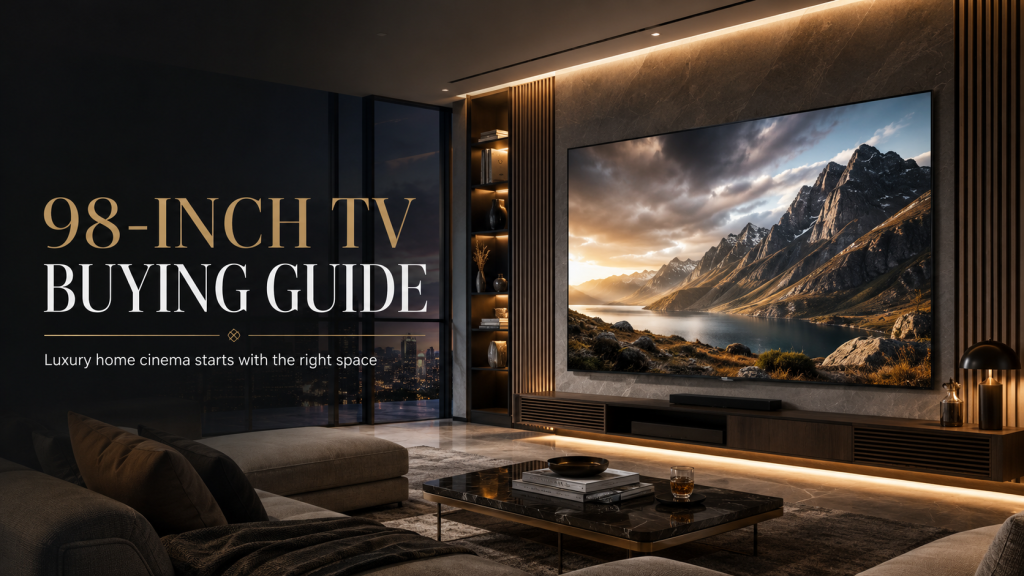
A 98-inch TV is one of those things that looks completely reasonable in a showroom. Then you imagine it on your own wall. Suddenly, you start wondering whether it will feel like a private cinema or simply take over the entire living room. That is what makes buying a TV this large different. You are not only paying for a bigger picture. You are also deciding whether your room, viewing distance, furniture and everyday viewing habits can actually make the most of it. For the right home, a 98 inch TV can be genuinely impressive. Movies feel more cinematic, football is easier to follow and games become much more immersive. You get some of the scale of a projector setup without needing a separate screen or a dark room every time you watch something.
But bigger is not always the better choice. An 85-inch TV may already feel huge from your sofa. Low-quality broadcasts can look worse when stretched across a 98-inch screen. The built-in speakers may also feel underpowered beside such a large picture. So, before going for the biggest screen available, it is worth asking a simpler question: Will a 98-inch TV genuinely improve the way you watch, or would an 85-inch model suit your home better?
This guide looks at the screen’s real size, room layout, viewing distance, picture quality, installation and sound setup to help you decide.
How Large Is a 98-Inch TV in Real Life?
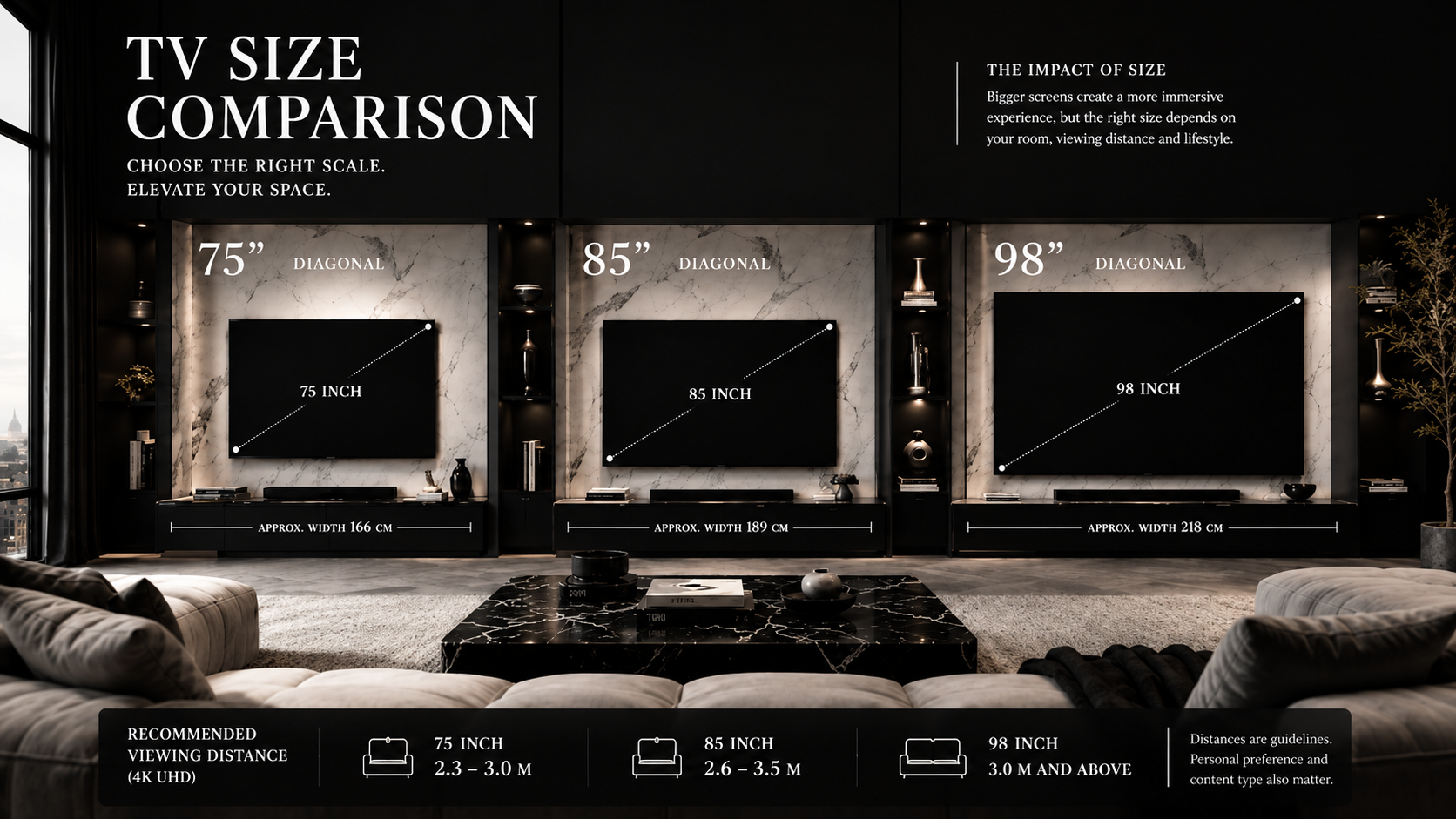
A 98-inch television is measured diagonally from one corner of the screen to the other. It is not 98 inches wide. In real life, most models are around 2.18 metres wide and 1.25 metres tall without the stand. The LG 98-Inch NANO 4K UHD AI NU85, for example, measures 2184 × 1252 mm and weighs 50 kg without its stand. The TCL 98″ C6K Premium QD-MiniLED TV Series is almost identical in width and height, weighing 48.5 kg without its stand. That is wider than many three-seater sofas.
The jump from 85 to 98 inches is also larger than it sounds. A 98-inch screen gives you approximately 33% more display area than an 85-inch TV and around 71% more than a 75-inch screen. It is enough to make a clear difference during movies, sports and gaming, but it also means the TV will have a much stronger visual presence in the room. Before buying, mark the approximate width and height on the wall using masking tape. Then sit where you normally watch TV. This simple test helps because televisions often look smaller inside a large showroom. Once the outline is on your own wall, you will quickly see whether the size feels exciting or excessive.
What Room Size Works for a 98-Inch TV?
You do not need a dedicated cinema room, but you do need enough distance to view the screen comfortably. Around 3 metres is a sensible starting point for a 98-inch 4K TV. Sitting slightly closer can create a stronger cinema-like experience, while sitting farther away may feel more relaxed for everyday programmes and sports. However, viewing distance is only one part of the decision.
Look at the room as a whole:
- Is the wall wide enough without crowding doors or windows?
- Will people regularly walk between the sofa and TV?
- Do windows or ceiling lights reflect directly on the screen?
- Can viewers sitting at the side still see the picture clearly?
- Is there room for a soundbar or speakers?
- Will the TV be mounted too high because of the console below it?
A large open-plan living room can suit a 98-inch home cinema TV very well. The screen remains impressive even when the seating position is farther away. In a narrow room, the same TV may feel overwhelming. If you constantly need to move your eyes or head to follow the action, an 85-inch model may be more comfortable.
85-Inch vs 98-Inch TV: Which Makes More Sense?
An 85-inch TV is already a big screen television. For many homes, it offers enough impact without demanding major changes to the room. A 98-inch model goes beyond simply looking large. From the right distance, the screen begins to fill more of your field of vision, which is where the home-theatre feeling starts to become more noticeable.
| Consideration | 85-Inch TV | 98-Inch TV |
|---|---|---|
| Viewing experience | Large and immersive | More cinema-like |
| Price | Generally more accessible | Higher product and setup cost |
| Room flexibility | Fits more layouts | Needs a wider wall and more depth |
| Picture flaws | Less noticeable | Weak content is easier to see |
| Sound setup | Standard soundbar may be enough | Wider audio setup feels more balanced |
| Future relocation | Difficult but manageable | Usually needs more planning |
Choose 85 inches when you want a seriously large screen that still fits comfortably into more homes. Choose 98 inches when immersion matters more than flexibility and the room is large enough to enjoy the difference.
Can a 98-Inch TV Fit Through Your Home?
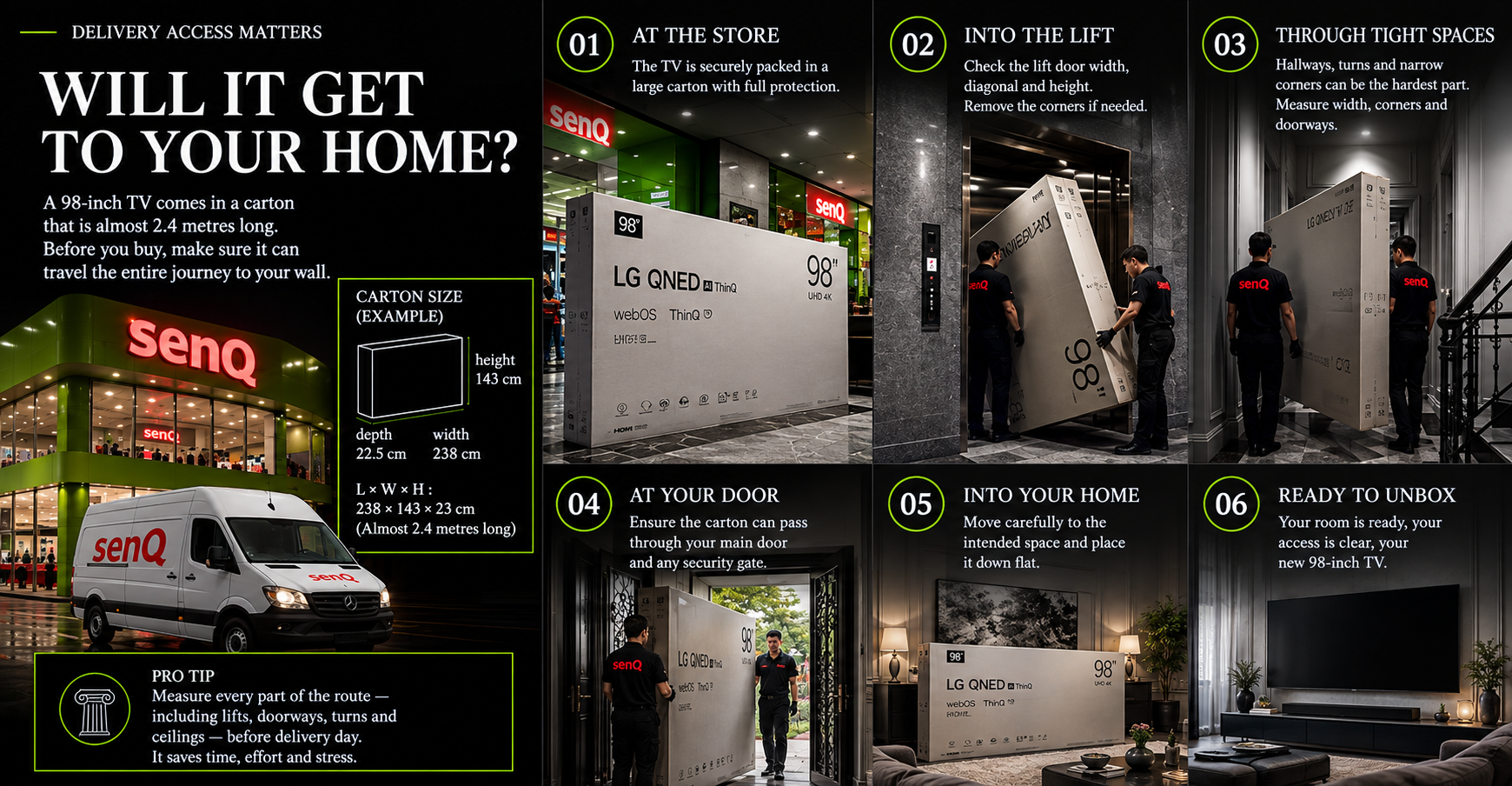
Once the screen size and room feel right, check the route it needs to take into the house. A 98-inch TV arrives in packaging that can measure close to 2.4 metres wide. The LG 98-Inch NANO 4K UHD AI NU85 carton, for example, measures 2380 × 1437 × 225 mm and weighs 65 kg with the TV inside.
Measure:
- Building or loading entrance
- Lift door height and width
- Space inside the lift
- Corridor width
- Tight corners
- Front door
- Staircase landing
- Entrance to the final room
Do not only check whether the box fits inside the lift. It also needs to pass through the lift door and turn into the corridor safely. Condominium residents should confirm service-lift bookings, permitted delivery hours and contractor requirements before the delivery date.
Wall Mount or TV Console?
Wall mounting usually gives a 98-inch TV a cleaner and more intentional home-theatre look. However, you cannot choose the bracket based only on a label such as “supports TVs up to 100 inches”. You also need to match the television’s weight and VESA mounting pattern. The LG 98-Inch NANO 4K UHD AI NU85 weighs 50 kg without its stand and uses a 600 × 400 mm VESA pattern. Its tabletop stand is approximately 1794 mm wide and 432 mm deep, which also shows why a normal TV console may not be suitable.
Before installing, confirm:
- Wall material and internal support
- Bracket weight capacity
- VESA compatibility
- Cable and socket access
- Space for a soundbar
- Final viewing height
A console may work when wall drilling is not possible, but it must be stable, deep enough for the stand and able to carry the TV safely. For a screen of this size and weight, professional assessment makes more sense than treating the installation like a normal television setup.
Does 4K Still Look Sharp at 98 Inches?
Yes, when you watch good-quality content from a suitable distance. A 98-inch 4K TV can look excellent with native 4K movies, current gaming consoles and high-quality streaming. The additional screen size helps landscapes, stadiums and game environments feel more expansive. The downside is that poor content becomes easier to notice. A compressed football stream or older broadcast that looks acceptable on a 55-inch TV may appear softer once enlarged across a 98-inch screen.
The final result depends on:
- Source resolution
- Streaming bitrate
- Viewing distance
- Internet connection
- Upscaling quality
- Picture processing
AI upscaling can clean up lower-resolution content, but it cannot create detail that was never in the original video. For buyers who mainly watch HD broadcasts or heavily compressed streams, picture processing may matter just as much as screen size.
What Features Matter Most on an Ultra-Large TV?
With a 98-inch screen, small picture weaknesses have more room to show themselves. Uneven brightness becomes easier to notice across large scenes. Weak motion handling may stand out during football or action movies. Reflections from a window can also cover a significant part of the display.
Priorities:
- Effective local dimming or Mini LED
- Consistent brightness
- Strong upscaling
- Good motion processing
- Native 120Hz or 144Hz refresh rate
- Anti-reflection treatment
- HDMI 2.1, VRR and ALLM
- eARC for an external sound system
The models currently sold by Senheng approach this differently. The TCL P8K focuses on QLED colour, a 144Hz refresh rate, Google TV and an ONKYO 2.1 audio system. The Hisense Q6Q includes QLED colour, Game Mode Plus, AI upscaling and the VIDAA platform. LG’s NU85 uses a native 120Hz panel with VRR support up to 144Hz. The best choice depends on what you watch most, not which product has the longest feature list.
Planning the Sound System
A 98-inch screen can make ordinary TV speakers feel smaller than they did in the showroom. For regular programmes and casual streaming, built-in sound may be enough. Once you watch films, concerts or games, however, the scale of the audio may not match the picture. A wide soundbar with a subwoofer is a practical starting point. Rear speakers can make the setup feel closer to a proper home theatre, especially in a larger room. Plan the audio before mounting the TV. Leave enough space beneath the screen and check the position of the eARC port, power sockets and subwoofer. The room itself also affects the result. Curtains, rugs and fabric furniture can reduce echo, while bare tiles, glass and empty walls may make the sound feel harsher.
Who Should and Should Not Buy a 98-Inch TV?
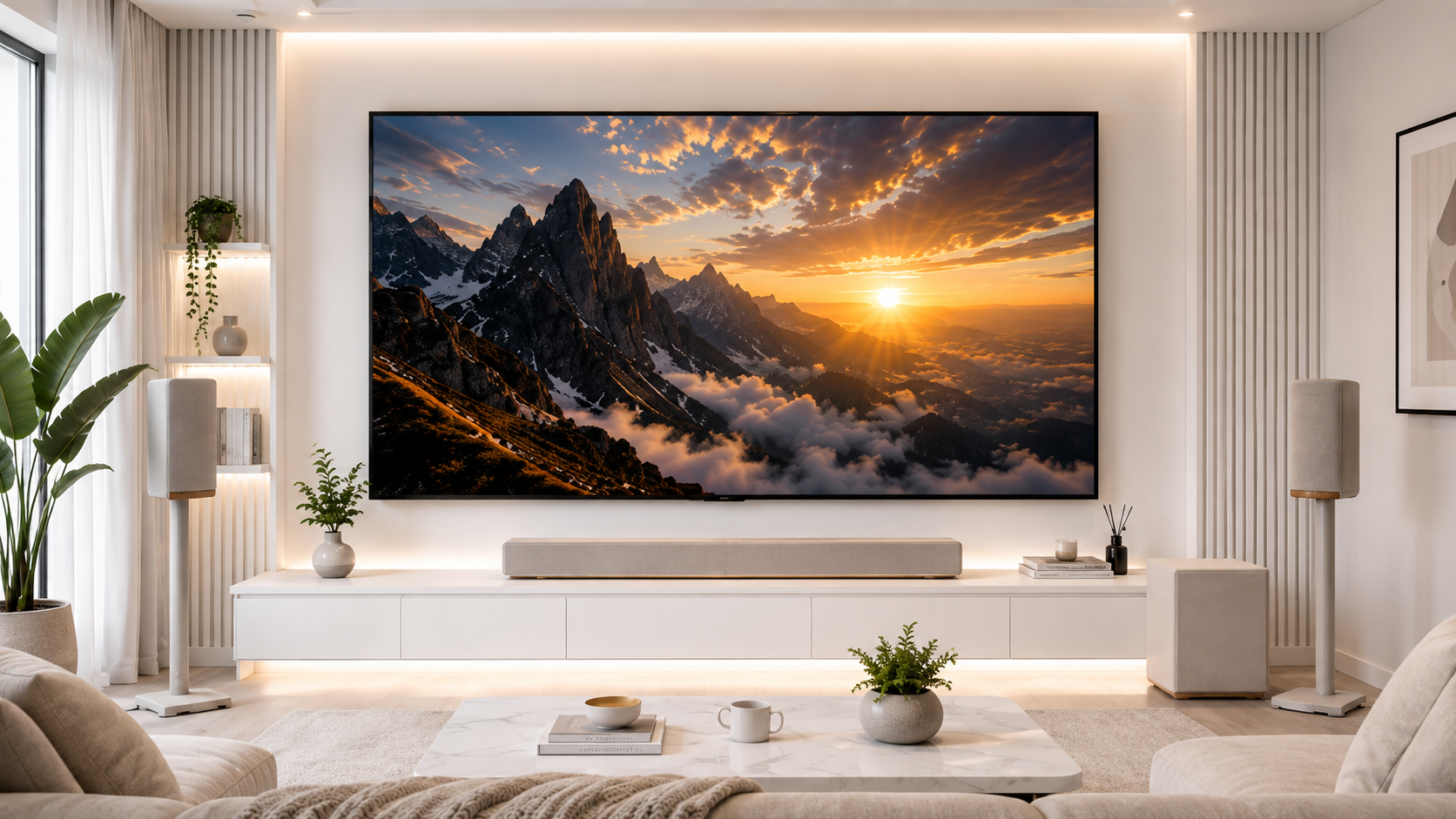
A 98-inch smart TV may be right for you when:
- You have a large living room or dedicated movie space
- Your sofa is around 3 metres away
- You regularly watch high-quality 4K content
- You want a premium gaming or sports setup
- The room has enough wall and audio space
- You expect to remain in the property for several years
An 85-inch TV may be the smarter option when:
- The room is narrow
- The seating position is very close
- You mostly watch lower-quality broadcasts
- You want easier placement and relocation
- The additional cost would leave less budget for picture quality or sound
The same considerations apply when comparing a 100 inch TV or another giant TV in Malaysia.
Final Verdict
A 98-inch TV is not automatically better simply because it is bigger. In the right room, it can bring much of the scale of a home theatre into everyday viewing. Movies feel more cinematic, games become more involved and live sports make better use of a large living area. But an 85-inch TV may already provide the experience you want with fewer compromises. Measure the room, test the screen outline from your sofa and think honestly about the content you watch. Then compare the exact models, installation needs and total setup cost. The best choice is not the largest TV you can fit through the door. It is the one that still feels right after the initial excitement wears off.
Frequently Asked Questions
How High Should a 98-Inch TV Be Mounted?
The centre of the screen should generally sit close to seated eye level. Since a 98-inch TV is around 124 to 125 cm tall, its bottom edge may need to sit lower than many homeowners expect. Before deciding the height, account for the sofa, TV console, soundbar, power sockets and cable outlets. Mounting it too high may feel uncomfortable during longer movies.
Can a Normal Wall Support a 98-Inch TV?
Do not assume that it can. The LG 98NU85 weighs approximately 50 kg without its stand and uses a 600 × 400 mm VESA pattern. The wall must support the combined weight of the television and bracket, including additional force if the mount extends away from the wall. Concrete, masonry and partition walls require different installation methods. The bracket’s weight capacity and VESA range must match the exact television model.